
 Admin
Admin 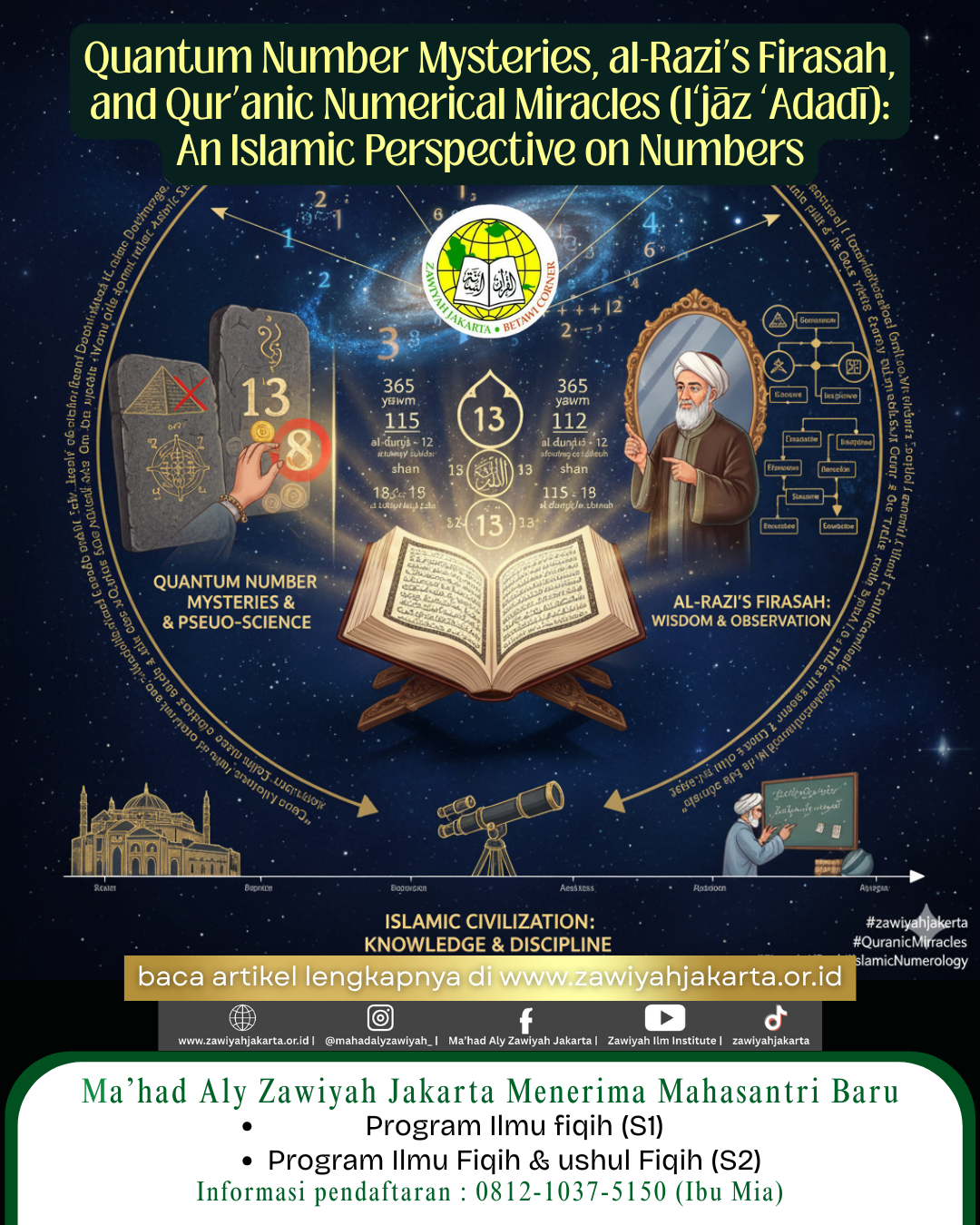
Quantum Number Mysteries, al-Razi’s Firasah, and Qur’anic Numerical Miracles (I‘jāz ‘Adadī): An Islamic Perspective on Numbers
Introduction: Humanity’s Fascination with Numbers
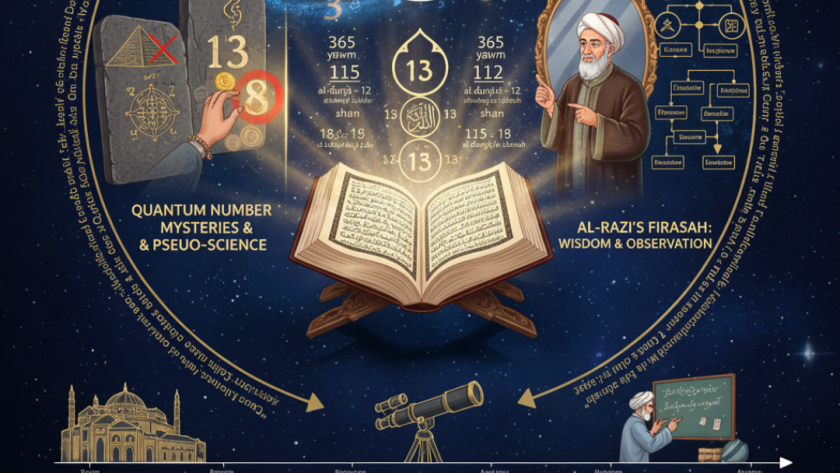
From ancient Egypt to Babylon, from Pythagoras in Greece to Feng Shui in China, numbers have always been seen as carrying mystical power. In modern times, “numerology” and even popular notions such as Quantum Number Mysteries claim that numbers unlock the hidden codes of the universe.
In Islam, however, numbers are not mystical forces of fate, but āyāt—signs of Allah’s order and wisdom. To distinguish truth from illusion, let us compare three perspectives:
1. Quantum Number Mysteries (modern numerology)
2. Firasah by Imam Fakhruddin al-Razi (d. 606 H)
3. I‘jāz ‘Adadī (numerical miracles) in the Qur’an
1. Quantum Number Mysteries: Between Inspiration and Pseudo-Science
Modern numerology often blends fragments of physics, metaphysics, and mysticism. It claims that numbers influence destiny, luck, or spiritual vibration.
Islam warns against such superstitions. The Prophet ﷺ said:
> “Whoever attaches something (superstitiously), will be entrusted to it.”
(Hadith, Sunan al-Tirmidhi, no. 2072)
Believing that “7 brings good luck” or “13 brings misfortune” is tathayyur (superstition), which can lead to minor shirk.
Still, the popularity of these ideas reflects humanity’s longing for meaning. Islam does not reject reflection upon patterns but redirects it: numbers are divine signs, not independent powers.
2. Al-Razi’s Firasah: Reading Signs, Not Fortune-Telling
Imam Fakhruddin al-Razi, the great theologian and philosopher, discussed firasah (insight into people’s character through observable signs).
This is rooted in the hadith:
> “Beware the firasah of the believer, for he sees with the light of Allah.”
(Hadith, Sunan al-Tirmidhi, no. 3127)
For al-Razi, firasah was not mystical fortune-telling. It was a disciplined method of observation—linking external features, gestures, and speech patterns to inner psychological states. This parallels modern psychology and anthropology, where human behavior and culture reflect deeper realities.
Thus, unlike quantum numerology’s speculation, al-Razi’s firasah is empirical and spiritual, framed within the belief that ultimate knowledge belongs to Allah alone.
3. I‘jāz ‘Adadī: Numerical Miracles of the Qur’an
I‘jāz ‘Adadī refers to the Qur’an’s mathematical harmony, which reveals its divine authorship.
Notable examples include:
The word yawm (day) occurs 365 times—equal to the days in a solar year.
The word shahr (month) occurs 12 times—equal to the months in a year.
The words al-dunyā (worldly life) and al-ākhirah (afterlife) each occur 115 times, showing perfect balance.
The Qur’an itself affirms:
> “Indeed, the number of months with Allah is twelve months in the register of Allah from the day He created the heavens and the earth…”
(Qur’an 9:36)
Such phenomena are not superstitions but profound demonstrations of divine wisdom, strengthening faith in the Qur’an’s miraculous nature.
4. Numbers in Prophetic History, Philosophy, and Sufism
In the Sunnah, numbers function as divine structures of worship, not mystical charms:
Five daily prayers discipline time.
One month of Ramadan fasting renews the soul.
Seven circuits of ṭawāf symbolize spiritual completion.
In Islamic philosophy, numbers are abstract representations of cosmic order. In Sufism, numbers are used symbolically: repetitive dhikr (33, 100) is not mechanical, but a pathway for the heart to ascend toward Allah.
Thus, numbers in Islam are functional, symbolic, and spiritual, never independent agents of fate.
5. Comparative Perspective: Global Numerology vs. Islamic Vision
Egypt & Babylon: numbers linked to gods.
Greek Pythagoras: numbers as the essence of cosmos.
Chinese Feng Shui: numbers direct energy.
Kabbalistic Gematria: interpreting sacred texts through numbers.
Islam: numbers are signs of Allah (āyāt), not determinants of destiny.
Allah reminds:
> “Indeed, in the alternation of night and day, and in what Allah has created in the heavens and the earth, are signs for people who fear Allah.”
(Qur’an 10:6)
6. Toward a Contemporary Islamic Framework on Numbers
In the age of digital culture and “quantum spirituality,” Muslims must offer clarity:
1. Education: Teach the Qur’an’s numerical structure to inspire faith.
2. Correction: Reject numerology and pseudo-science as superstition.
3. Integration: Use numerical miracles (i‘jāz ‘adadī) as a bridge in interfaith and science-religion dialogue.
4. Application: Employ mathematics for social planning, economics, and da‘wah strategies.
Conclusion: Numbers as Signs, Not Gods
Numerology may inspire curiosity but often slips into pseudo-science. Al-Razi’s firasah demonstrates rational and spiritual observation. The Qur’an’s i‘jāz ‘adadī reveals the perfection of divine revelation.
Muslims should see numbers as windows to Allah’s wisdom, not as determinants of fate.
> “Indeed, in the creation of the heavens and the earth, and the alternation of the night and the day, are signs for those of understanding.”
(Qur’an 3:190)
Numbers are signs. Fate is with Allah alone.
???? References
The Qur’an (Surah 9:36; 10:6; 3:190).
Sunan al-Tirmidhi, hadith no. 2072 & 3127.
Fakhr al-Din al-Razi, Mafātīḥ al-Ghayb (The Great Qur’anic Commentary).
Osman Bakar, Mathematics and the Sacred in Islam, Islamic Quarterly, 1993.
Seyyed Hossein Nasr, Science and Civilization in Islam.
Ziauddin Sardar, Reading the Qur’an: The Contemporary Relevance of the Sacred Text of Islam.
#zawiyahjakarta
#QuranicMiracles
#FirasahAlRazi
#IslamicNumerology


